Master thesis
Captured Landscapes, Living Montages
Iterative photography and photomontage as context-sensitive tools for exploring, interpreting, and designing landscapes.
Role Author and researcher
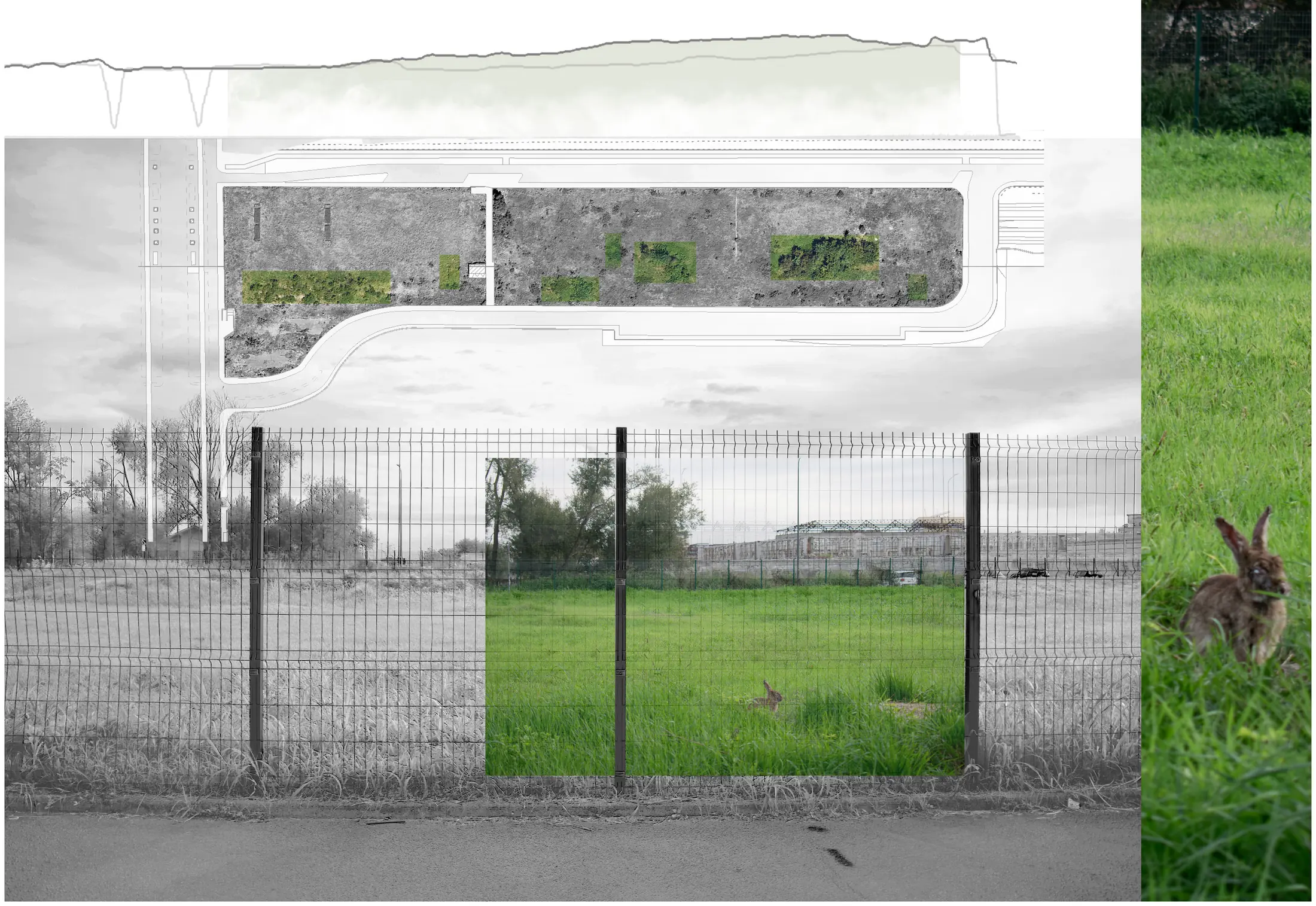
Wondered
Maps give precision and lose the atmosphere of a place. Digital renderings give the atmosphere and invent the place. Between the two sits a gap where design solutions look logical on paper and fail to resonate on site.
This thesis asks whether photography and photomontage, used as iterative tools rather than as illustration, can bridge it.
The research question
How can photography and photomontage be reintegrated as iterative visual design tools to bridge the gap between site analysis and design transformation in landscape architecture?
The Patch
The test site is the Patch: a fenced, forgotten grassland beside Porta Vittoria station in Milan, nearly 23,700 m², about two-thirds the size of Piazza del Duomo.
Explored
From canvas to camera to screen: four ways landscape has been pictured, and what each could and could not show about change.
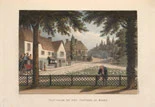
Red Books
Flip-book overlays of existing and proposed. Change shown as discrete moments.
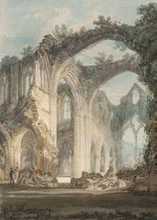
The Picturesque
Landscape as a composed visual narrative of light, texture and perspective.
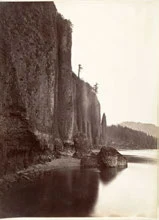
Photography
Captures light, shifting shadow and spatial sequence, not only appearance.
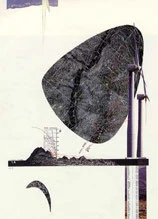
Photomontage
A medium for layering meanings and temporalities.
Observed
Three living precedents that put photographs to work.
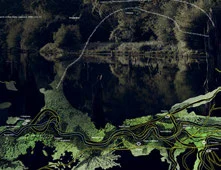
Petrochemical America
Hidden infrastructures and social inequities made visible.
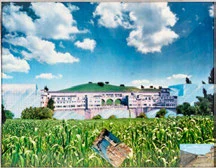
Superstudio
Speculative and ideological potential.
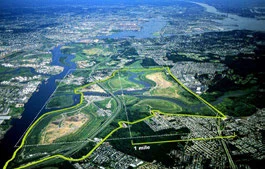
Field Operations
Visual experiments carried into built work.
Captured: from afar
The dashed outline marks the Patch. Around it the station moved underground, a market became a park, and the Ex Macello and the library site were redeveloped. The strip took its present shape around 2007.
From the day the train line transformed into its new setting, it hardly ever changed again.
Captured: at ground
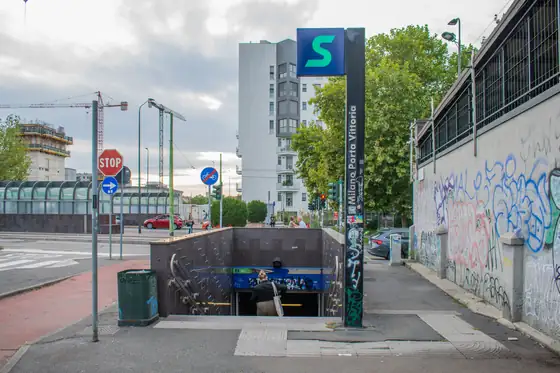
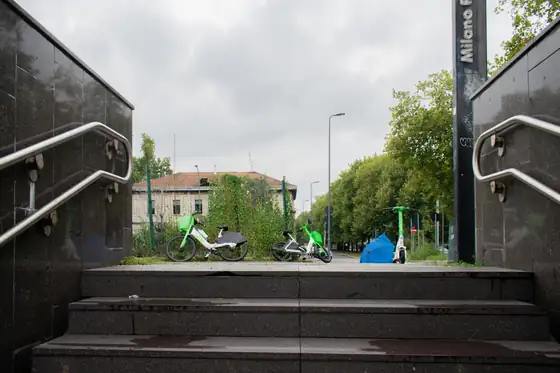
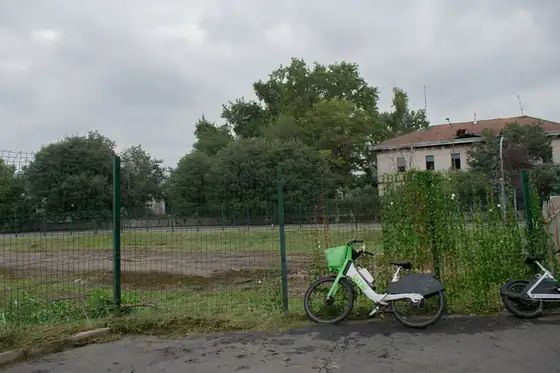
A terminated bike lane, 3 train station entrances, multiple parking spots and 2 bike stops, a couple of rabbits, some birds and some trash.
01 / 36
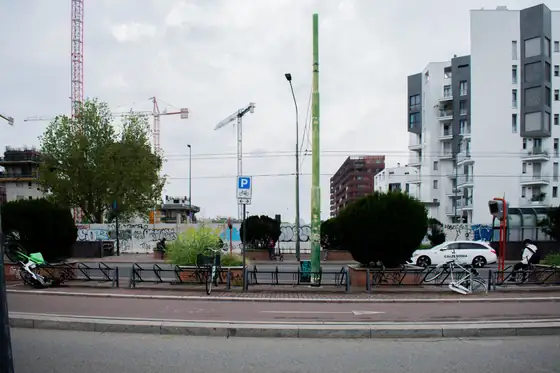
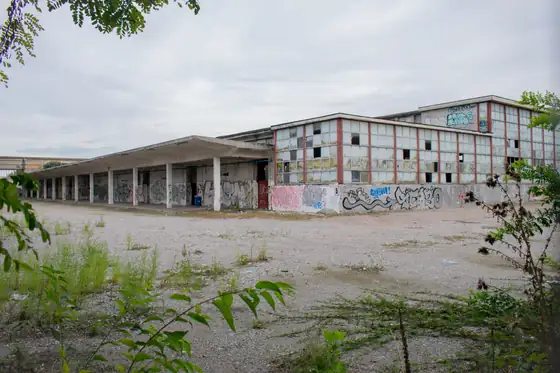
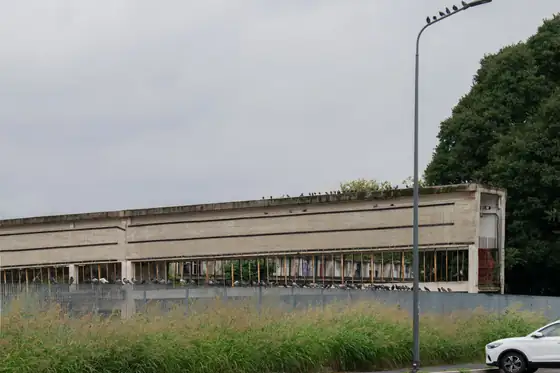
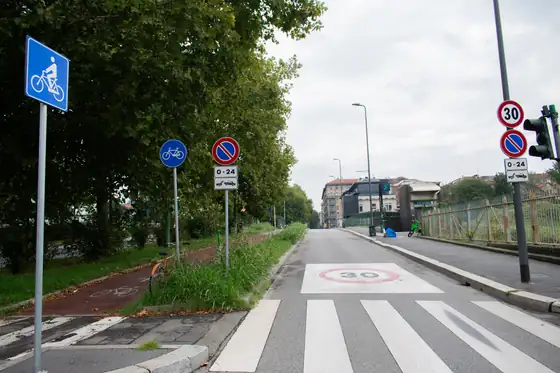
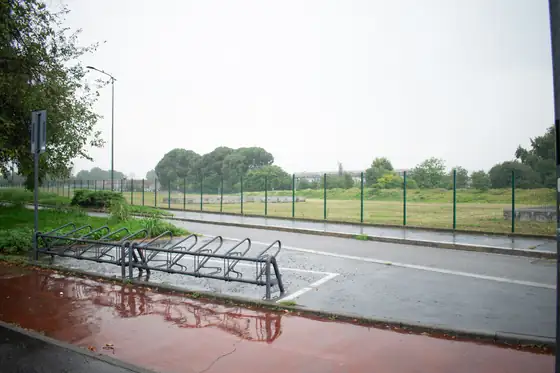
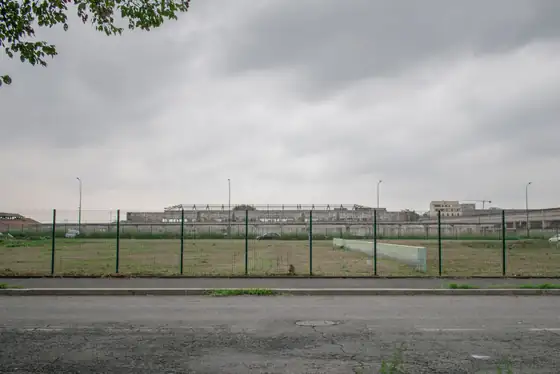
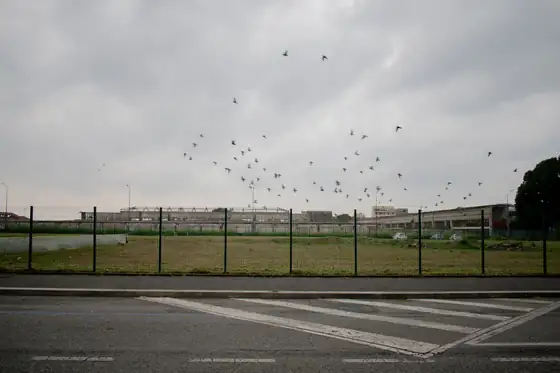
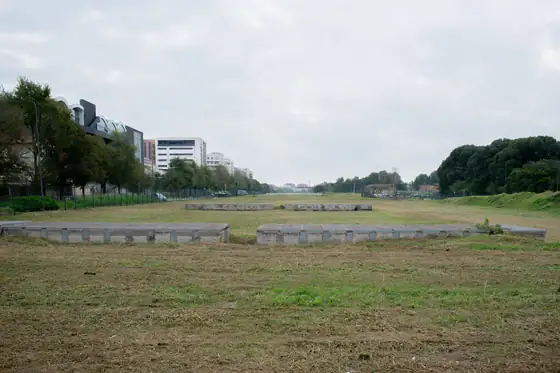
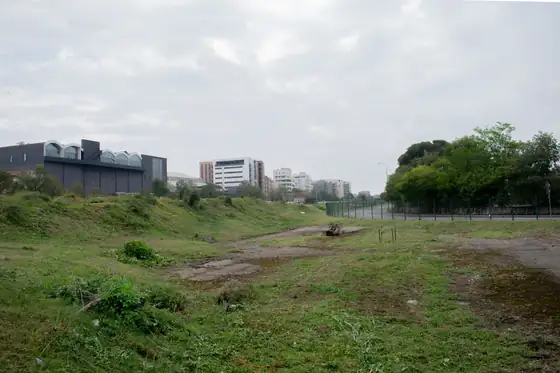
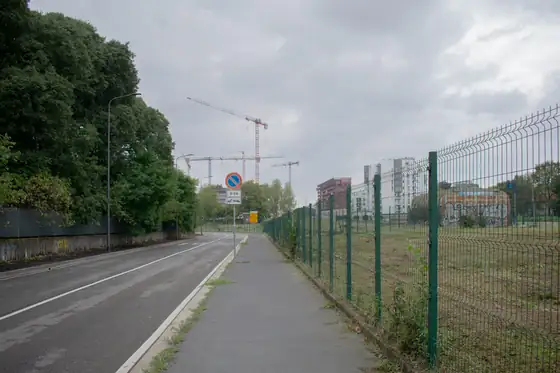
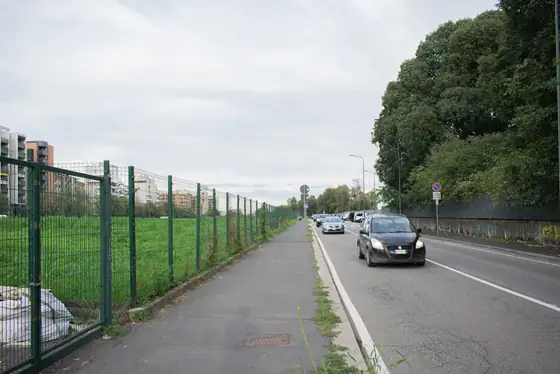
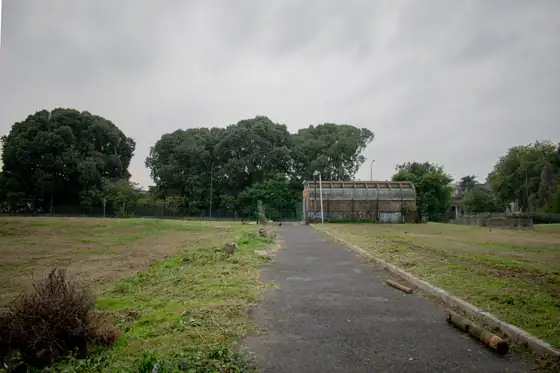
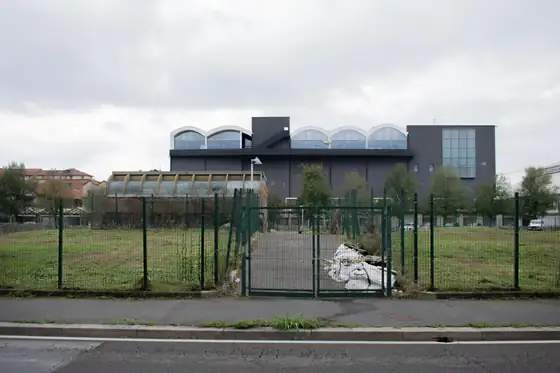
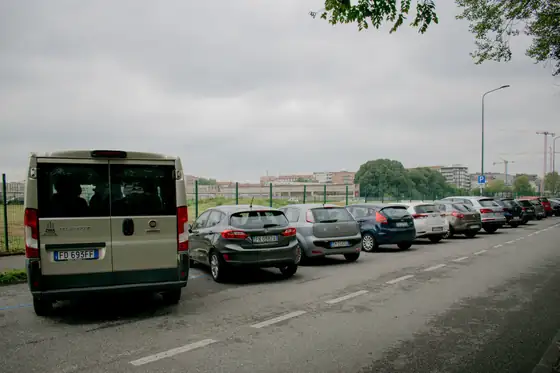
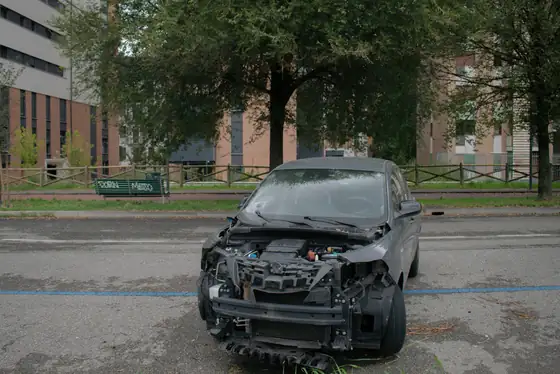
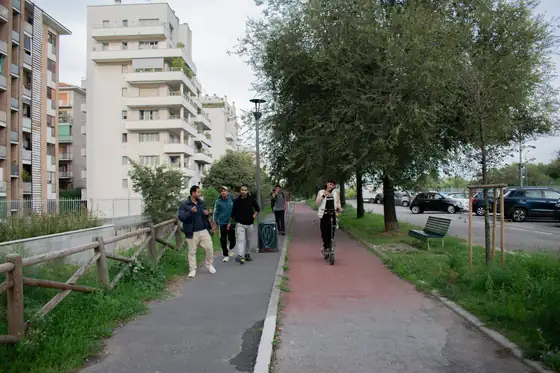
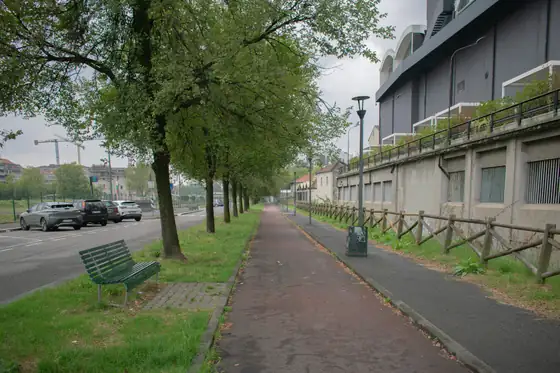
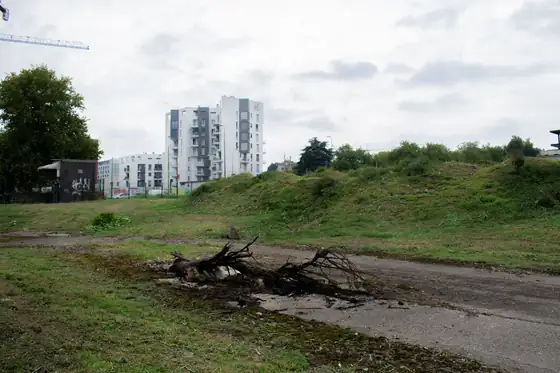
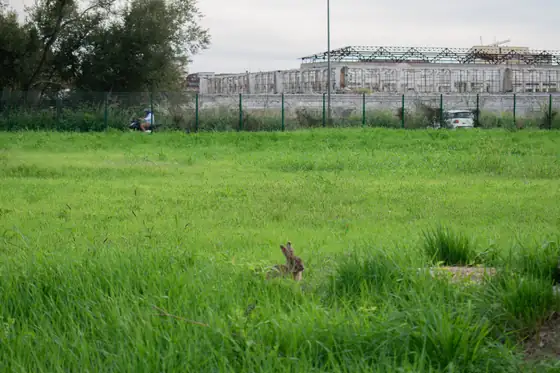
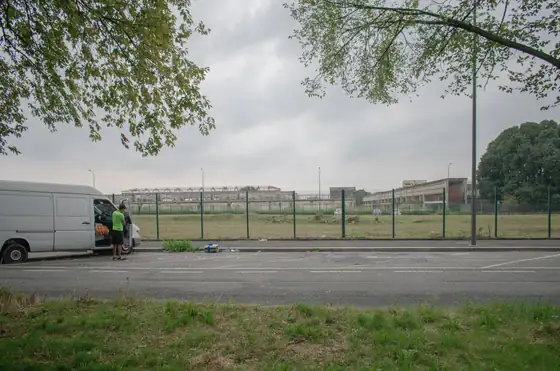
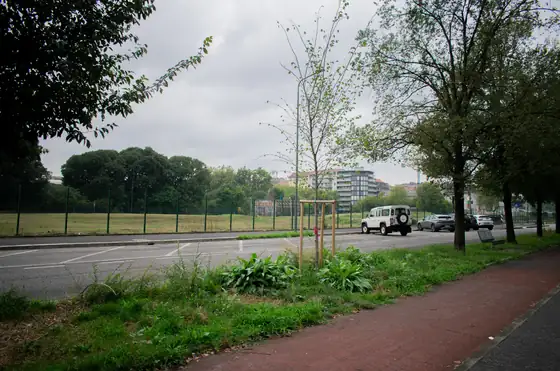
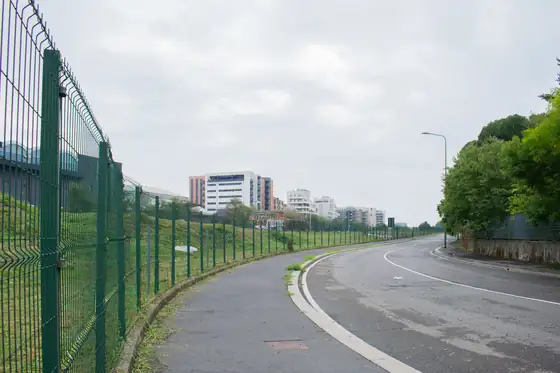
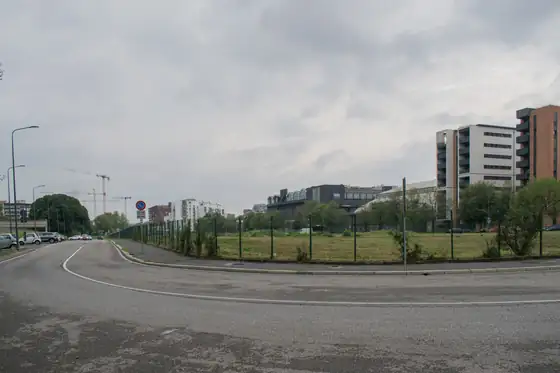
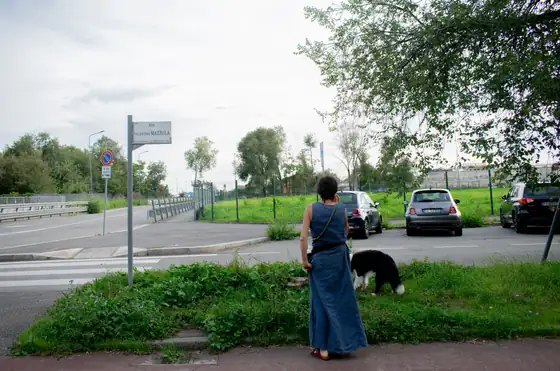
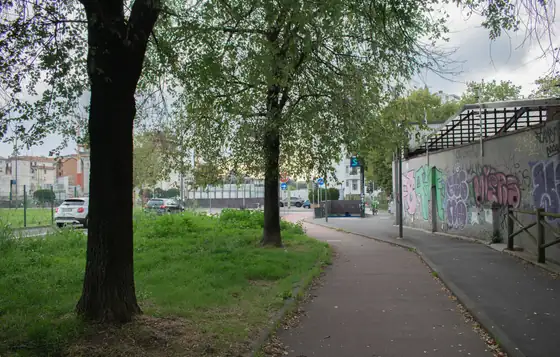
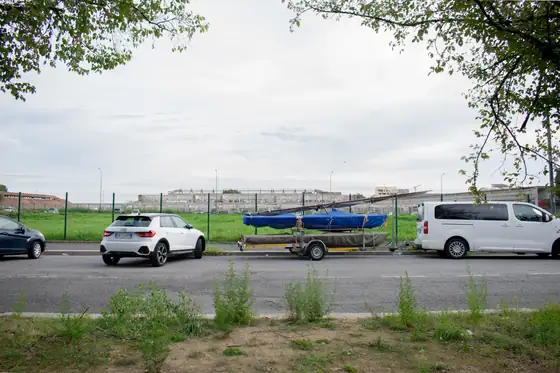
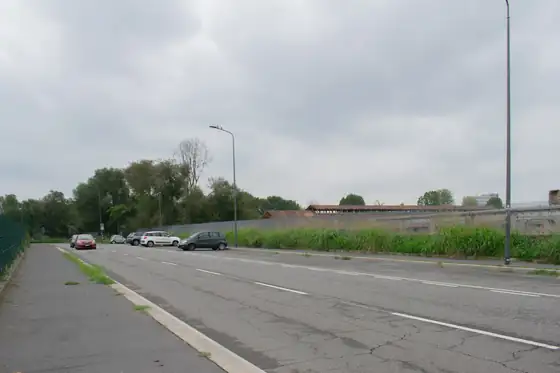
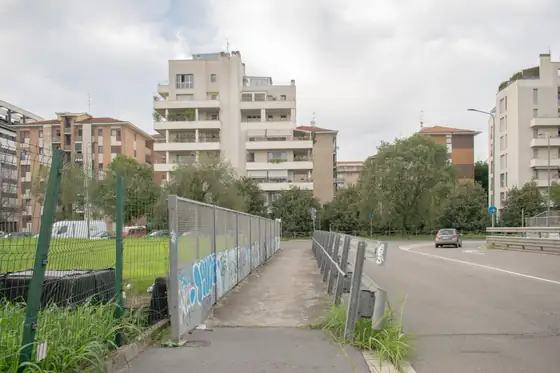
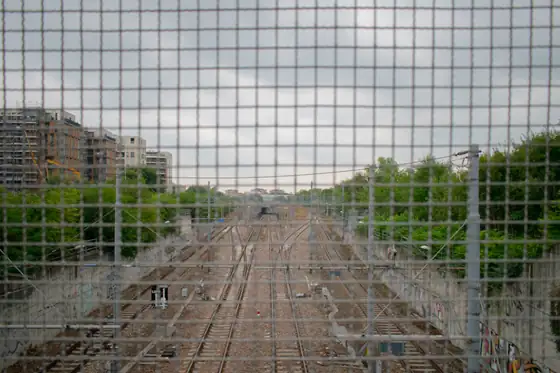
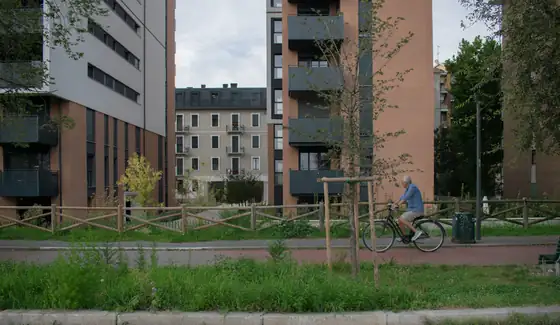
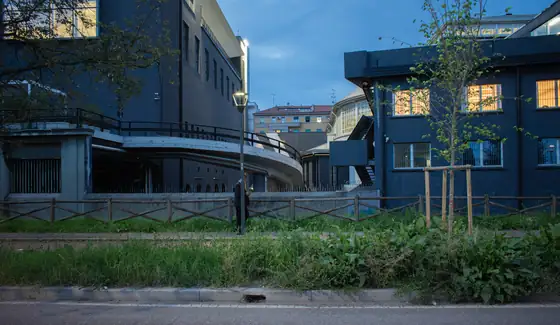
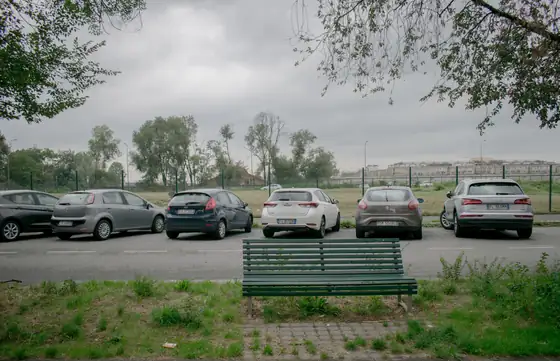
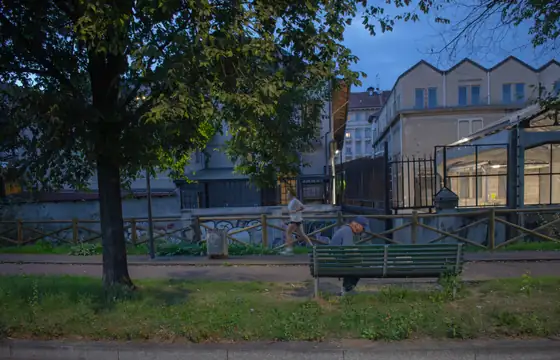
01 Porta Vittoria bus stop
02 Porta Vittoria train station, northern entrance in Via Valentino Mazzola
03 Porta Vittoria train station, southern entrance in Viale Molise
04 West side of the Patch looking to Ex Macello from the train station
05 Ex Macello building in the south of the Patch
06 Ex Macello building in the south of the Patch
07 Viale Monza and the Patch on the right
08 Bike stand of the Porta Vittoria train station, northern entrance in Via Valentino Mazzola
09 The Patch from the middle, looking from north to south
10 The Patch from the middle, looking from north to south
11 The Patch from the middle, looking from west to east
12 The Patch from the side, looking from north to south
13 Southern sidewalk looking to the west
14 Southern sidewalk looking to the east
15 The abandoned station
16 The abandoned station
17 Via Valentino Mazzola, northern parking
18 Via Valentino Mazzola, northern parking
19 Via Valentino Mazzola, bike path in the evening
20 Via Valentino Mazzola, bike path in the afternoon
21 The Patch
22 The Patch
23 Via Valentino Mazzola, northern parking
24 Via Valentino Mazzola, northern parking
25 Via Azzurri d’Italia
26 Via Azzurri d’Italia
27 Eastern corner
28 Western corner
29 Via Valentino Mazzola, northern parking
30 Via Azzurri d’Italia, southern parking
31 Via Azzurri d’Italia, the bridge
32 Via Azzurri d’Italia, the bridge
33 Via Valentino Mazzola, bike path in the evening
34 Via Valentino Mazzola, bike path at night
35 Via Valentino Mazzola, bike path in the morning
36 Via Valentino Mazzola, bike path at night
Drag the strip or the frame above it. Click a photograph to enlarge it.
Who wants a big narrow stripe of void?
Captured: up close
Sometimes you can’t see them from afar, you have to step in to feel it, to narrow your eyes to see the full story.
The first frame is the Patch from above. The outlines mark, more or less, where each photograph was taken.
Click an image to enlarge it. “Large” makes the grid bigger, and you can drag it in any direction.
Is this really nature?
Experimented
Three questions drawn from the photographs steer ten montages: who uses the Patch, what history has been lost from it, and what boundaries separate it from the city. Each montage keeps photographic evidence from the site and tests one spatial narrative, scale or time. Wild, the tenth, opens this page.
Reflected
In every marginal patch lies the potential for new stories to emerge.
In the first person
For me, this process was not only methodological but also personal. As someone navigating between places, identities, and disciplines, photography and montage became both a design tool and a way of seeing.
What the research leaves
Atmospheric literacy
The ability to perceive and respond to subtle environmental and social dynamics that traditional analysis often misses.
Montage as prototyping
Speculative interventions tested directly against documented site conditions, bridging observation and speculation.
Stated limits
One site, and little participatory engagement: the framework is a foundation to refine, not a finished procedure.
Thesis credits
- Author and researcher
- Saba Seighali
- Guidance
- Prof. Marialessandra Secchi
- Programme
- Master Degree in Landscape Architecture, Land Landscape Heritage
- University
- Politecnico di Milano
- Aerial photographs
- CGR ortofoto, Milan